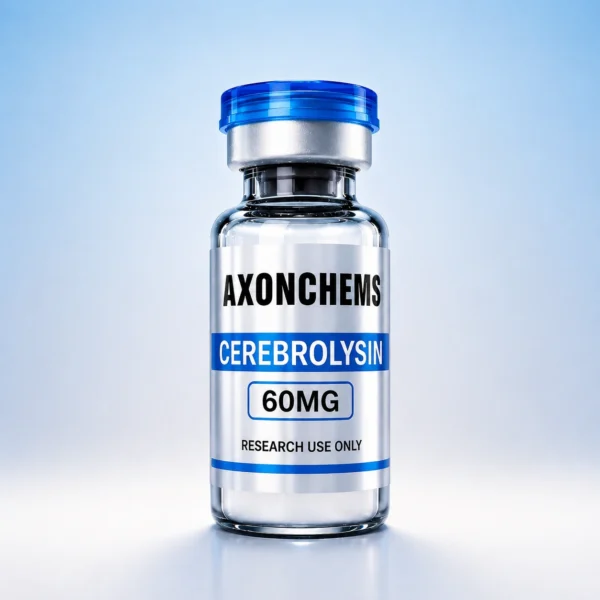
Cerebrolysin is a parenteral neurotrophic preparation derived from purified porcine brain tissue, composed of low-molecular-weight biologically active peptides (under 10 kDa) combined with free amino acids. The peptide fraction is produced through controlled enzymatic breakdown of lipid-free brain protein, yielding a standardized mixture that closely mimics the action of endogenous neurotrophic factors.
Cerebrolysin has been studied extensively in research models of neurodegenerative and acute neurological conditions, with documented pharmacological similarity to brain-derived neurotrophic factor (BDNF), nerve growth factor (NGF), glial cell line-derived neurotrophic factor (GDNF), and ciliary neurotrophic factor (CNTF). Research investigations have explored its multimodal mechanism, including modulation of neuronal differentiation and survival, protection from excitotoxic and ischemic injury, regulation of beta-amyloid processing, and downstream effects on synaptic plasticity.